
những chủ đề nghiên cứu hiếm hoi, những sự thật luôn bị bưng bít !
EpiPen - Câu chuyện bóc lột gian tham của hãng thuốc Mylan
EpiPen - thuốc cấp cứu dị ứng cấp tính - chỉ đáng giá 1 đô la
Subject: ***_EpiPen_:_câu_chuyện_bóc_lột gian_tham_của_hãng_thuốc_Mylan
From: Trạng Móc
Date: Mon, June 19, 2017 4:34 pm
Giàu rồi vẫn muốn giàu to (hơn)
giàu to thì phải "hốt" cho thật nhiều !
nhân gian dẫu có tiêu điều
tham lam vô đạo, chẳng chiều lòng dân !!!
Dân chủ chỗ nào ?
Dân nào làm chủ ?
Ai làm chủ dân ?
:)
Trạng Móc
EpiPen là 1 ống thuốc dùng để cấp cứu dị ứng nặng (cấp tính).
Trong ống thuốc đó có dược liệu chính, epinephrine, chỉ đáng giá 1 đô la !
Cho dù chi phí sản xuất, giao hàng, quảng cáo của ống thuốc cao hơn gấp 5-10 lần, khoảng 5-10 đô la
thì hãng thuốc vẫn bóc lột bệnh nhân
bằng cách chém 609 đô la - cho 2 ống thuốc !!!
Đây là doanh nghiệp Mỹ tham nhũng bóc lột công khai
mà dân không làm gì được !!!
Các nhà điều tiết của nhà nước Mỹ cho biết, hãng Mylan này đã bóc lột,
"chém dư " (overcharged) 1,27 tỉ đô la tiền chi trả bảo hiểm Medicaid của nhà nước các bang !
Tháng 10 năm ngoái, hãng này đã hoàn trả lại nhà nước liên bang gần 500 triệu USD để khỏi bị điều tra thêm về vụ chặt chém bệnh nhân .
Đồng thời, người ta đã tố cáo hãng này năm 2016 đã trả lương bổng cho chủ tịch công ty 97 triệu đô la, cao hơn thu nhập của giám đốc các hãng
Disney, General Electric và Walmart cộng lại !
__________________
Outcry Over EpiPen Prices Hasn’t Made Them Lower

Charles Duhigg
ADVENTURES IN CAPITALISM
A few weeks ago, after some particularly incompetent parenting on my part (nuts in the dessert, a rushed trip to an emergency room after my child’s allergic reaction), I visited the local pharmacy to fill an EpiPen prescription.
You might recall EpiPen as last year’s poster child for out-of-control drug prices. Though this simple medical device contains only about $1 of the drug epinephrine, the company that sells it, Mylan, earned the public’s enmity and lawmakers’ scrutiny after ratcheting up prices to $609 a box (containing only 2 pieces ).
Outraged parents, presidential candidates and even both parties in Congress managed to unite to attack Mylan for the price increases. By August, the company, which sells thousands of drugs and says it fills one in every 13 American prescriptions, was making mea culpas and renewing its promise to “do what’s right, not what’s easy,” as the company’s mission statement goes.
So I was surprised when my pharmacist informed me, months after those floggings and apologies had faded from the headlines, that I would still need to pay $609 for a box of two EpiPens.
Didn’t we solve this problem?
Not quite. What’s more, Mylan is back in the news. On Wednesday, regulators said the company had most likely overcharged Medicaid by $1.27 billion for EpiPens. The same day, a group of pension funds announced that they hoped to unseat much of Mylan’s board for “new lows in corporate stewardship,” including paying the chairman $97 million in 2016, more than the salaries of the chief executives at Disney, General Electric and Walmart combined.
Over the last several weeks, I’ve spoken with 10 former high-ranking executives at Mylan who told me that they weren’t surprised EpiPen prices were still high. Nor were many startled by last week’s developments.
Mylan, they said, is an example of a firm that has thrived by learning to absorb, and then ignore, opprobrium. The company has an effective monopoly on a lifesaving product, which has allowed its leaders to see public outrage as a tax they must pay, and then move on.
Mylan has been called out again and again over the years — by the company’s own employees, regulators, patients, politicians and the press — and hasn’t changed, even as revenue has skyrocketed, hitting $11 billion last year. The firm is a case study in the limits of what consumer and employee activism, as well as government oversight, can achieve.
Which means this time, if we’re hoping for a different outcome, something more needs to be done.
To understand Mylan’s culture, consider a series of conversations that began inside the company in 2014. A group of midlevel executives was concerned about the soaring price of EpiPens, which had more than doubled in the previous four years; there were rumors that even more aggressive hikes were planned. (Former executives who related this and other anecdotes requested anonymity because they had nondisclosure agreements or feared retaliation. Aspects of their accounts were disputed by Mylan.)
In meetings, the executives began warning Mylan’s top leaders that the price increases seemed like unethical profiteering at the expense of sick children and adults, according to people who participated in the conversations. Over the next 16 months, those internal warnings were repeatedly aired. At one gathering, executives shared their concerns with Mylan’s chairman, Robert Coury.
Mr. Coury replied that he was untroubled. He raised both his middle
fingers (implying, FUCK YOU !) and explained, using colorful language, that anyone criticizing Mylan, including its employees, ought to go copulate (FUCK) with themselves. Critics in Congress and on Wall Street, he said, should do the same. And regulators at the Food and Drug Administration? They, too, deserved a round of anatomically challenging self-fulfillment (GO FUCK THEMSELVES).
When the executives conveyed their anxieties to other leaders, including the chief executive, Heather Bresch, these, too, were brushed off, they told me.
Those top leaders’ responses are a far cry from the message on Mylan’s website, which says that “we challenge every member of every team to challenge the status quo,” and that “we put people and patients first, trusting that profits will follow.”
But Mylan is a prime example of how easy it is for leaders to say one thing publicly and act differently in private. When we talk about consumer or employee activism, we tend to focus on firms like United Airlines, which quickly apologized and changed its policies after a video emerged of a passenger being dragged off a plane.
However, in many other cases, outrage is ineffective. Mylan’s behavior persists because it is hard, and often tedious, for employees and the public to continue complaining — particularly when bosses disagree, or when some newer outrage appears on our Facebook feed.
But the costs of going silent are real. Regulators missed an opportunity to reform Mylan in 2012 when the company produced a television commercial showing a mother driving her son to a birthday party and implying that he could eat whatever he wanted, despite his nut allergy, as long as an EpiPen was nearby to counteract a reaction. The commercial also suggested that an EpiPen was a sufficient treatment on its own.
Mylan knew neither of those was true, according to executives from that period. In fact, Mylan had recently started a major lobbying effort to encourage schools to stock EpiPens by arguing that people with serious food allergies are always at risk, and that EpiPens were a necessary supplement to emergency medical treatment.
Before the birthday advertisement aired, the ad went through multiple internal review processes. Mylan executives told Ms. Bresch that the commercial was improper. One employee went so far as to send an internal email saying the advertisement would increase the frequency of allergic reactions, according to a person who saw the correspondence.
Ms. Bresch disagreed. She said it was better to act boldly, according to a former executive who participated in that conversation.
So the advertisement went on television. And a record number of consumer complaints arrived at the Food and Drug Administration. The agency ordered the commercial pulled after just a few days because it was “false and misleading,” “overstates the efficacy of the drug product” and “may result in serious consequences, including death.” The agency ordered Mylan to broadcast another ad, this one acknowledging that the “EpiPen cannot prevent an allergic reaction.”
But regulators never investigated why Mylan’s internal protocols had allowed the dangerous ad to air. And a year later, Mylan received something akin to a government endorsement. President Barack Obama signed a federal law encouraging schools to stock emergency epinephrine supplies. The White House celebrated it as the “EpiPen Law.”
When I approached Mylan about these and other anecdotes, the company disputed employees’ accounts. In a statement,
it wrote that “any allegations of disregard for consumers who need these lifesaving drugs, government officials, regulators or any other of our valued stakeholders are patently false and wholly inconsistent with the company’s culture, mission and track record of delivering access to medicine.”
Mr. Coury declined to be interviewed, but Ms. Bresch sat down with me last month at Mylan’s Manhattan offices. She said that Mylan was “a pretty rare and unconventional company,” and that it was focused on delivering low-cost drugs. A broken health care system, she said, is responsible for the inefficiencies and high prices that plague consumers.
She added that Mylan had responded promptly when the Food and Drug Administration criticized the company’s advertisement in 2012, and that the EpiPen had become more expensive because Mylan had invested in public awareness and improving the device.
“Look at what we’ve built, and what we deliver day-in and day-out,” Ms. Bresch told me, “and at the center of all of that is the patient.”
But it seems hard to reconcile those comments with allegations from employees, regulators and other companies. In December, attorneys general in 20 states accused Mylan and five other firms of conspiring to illegally keep prices high on an antibiotic and a diabetes drug. In October, Mylan returned nearly a half-billion dollars to the federal authorities in an attempt to stem the investigation into overcharging that regulators cited on Wednesday. And in April, one of Mylan’s competitors, Sanofi, filed a lawsuit accusing the firm of committing antitrust violations to keep an EpiPen competitor off the market.
The cost of an EpiPen has spurred public outrage and the scrutiny of lawmakers. Credit Joe Raedle/Getty Images
Then there are situations that, at other firms, might have set off firings or corporate soul-searching, but that at Mylan caused neither. In 2007, reporters discovered that Ms. Bresch had not received the M.B.A. degree she claimed on her résumé. In 2012, Mr. Coury was criticized by investors and the media for repeatedly using the company plane to fly his son to music concerts. (And then there was the time, in 2013, when Mr. Coury, at a Goldman Sachs conference, indicated his dislike for hypothetical questions by saying that “if your aunt had balls, she’d be your uncle.”)
In our interview, Ms. Bresch said there was nothing in Mylan’s culture she would change. The company also said it had found no evidence of price-fixing or antitrust behavior, that the government overcharges had resulted from an innocent disagreement over regulatory interpretations and that Mylan’s compensation policies were appropriate.
“We are a for-profit business, and we have a commitment to shareholders,” Ms. Bresch told me. “But I think if there’s any company out there that has demonstrated you can do good and do well, we’re one of the few.” For instance, Ms. Bresch noted that Mylan had recently released a generic version of EpiPen.
When I asked my pharmacist for the generic EpiPen, he told me that I would have to wait 90 minutes, until he could get my doctor on the phone to authorize the substitution. Then, he charged me $370 for the generics.
Mylan points out there are online coupons for EpiPen customers. In fact, the company says that since it came under attack in August, nearly 90 percent of EpiPen buyers have paid less than $100 per box because of insurance, discounts or coupons.
But for parents in urgent need of an EpiPen, or for patients who are poor, are not internet savvy or have high insurance deductibles — which are increasingly common — those programs can mean little. The most vulnerable often end up paying the highest prices, which is troubling when you consider that 15 million Americans have food allergies.
But hope springs eternal. With the recent criticisms coming on the heels of last year’s controversies, Mylan will have to change, right?
Perhaps. But only if people stay angry and active. Doctors need to write different prescriptions. Pharmacists need to guide patients to alternatives. Investors should examine further efforts to elect new Mylan board members.
In the meantime, I still believe — perhaps foolishly — that sustained attention might create change. And so, as long as Mylan flouts the norms of good corporate behavior, it seems worth continuing to scrutinize what the company is doing, and questioning why EpiPens cost so much.
Tin Đó Đây
2026-06-20 - Thu hồi sách "Chuyện với Thanh: Lời kể mới về ánh sáng" và làm rõ trách nhiệm
Cuốn sách Chuyện với Thanh: Lời kể mới về ánh sáng sau khi được phát hành đã gặp nhiều ý kiến phản ánh về nội dung. Bộ VH-TT-DL đã chỉ đạo Cục Xuất bản, In và Phát hành khẩn trương rà soát,
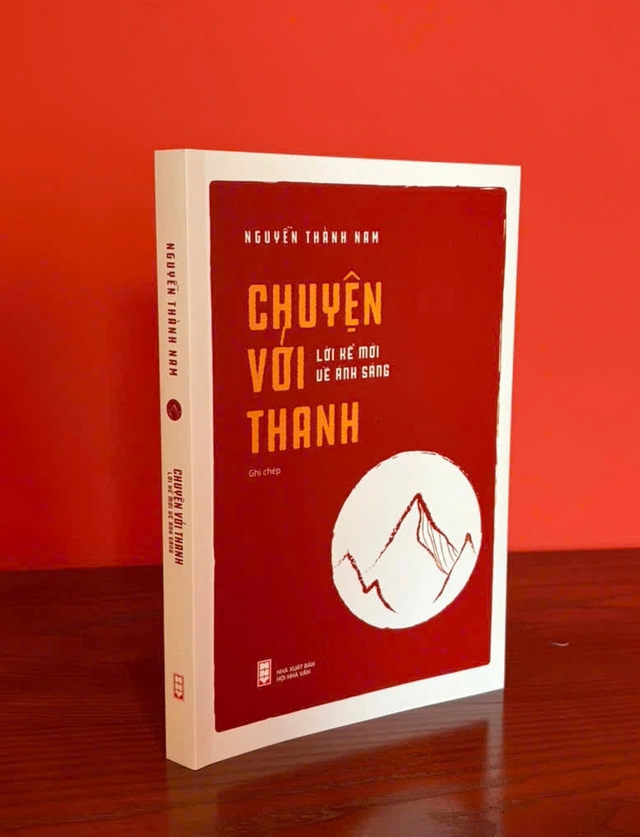 kiểm tra theo đúng chức năng, thẩm quyền và quy định của pháp luật về xuất bản.
2026-06-20 - Hỏa hoạn bùng phát tại một nhà thờ lịch sử ở Brooklyn, New York
Lửa đã thiêu rụi phần tháp nhọn của nhà thờ – công trình vốn đã tồn tại từ những năm 1850. Gần 200 lính cứu hỏa đã được huy động đến hiện trường. Sở Cứu hỏa Thành phố New York (FDNY) đã nhận được tin báo về vụ cháy tại Nhà thờ South Bushwick Reformed trên Đại lộ Bushwick, gần phố Himrod, vào thời điểm ngay trước 13:30. Ngọn lửa bốc cao đến mức có thể nhìn thấy từ cách xa hàng dặm.
2026-06-20 - Cho Phắn Luôn: "Chuyện Với Thanh" Đã Bị Cấm ‘Tiệt’, NXB Bị Phạt 100tr, Đình Chỉ 2 Tháng
2026-06-13 - Về câu hỏi: Làm thế nào để có “Steve Jobs Việt Nam”.
Câu hỏi gợi bao nhiêu liên tưởng sai lầm, có âm mưu tuyên truyền nào của ... bố Mẽo trong đây không?
2026-06-12 - 12 người thiệt mạng khi đi hành hương Đức Mẹ, trong đó có linh mục và nữ tu
Xe buýt chở đoàn hành hương Công giáo Ba Lan trên đường đến Medjugorje, địa điểm hành hương kính Đức Mẹ ở miền nam Bosnia, đã gặp nạn tại Croatia: bất ngờ lao khỏi đường,
 khiến 12 người thiệt mạng và 32 người bị thương. Trên xe có 44 người, bao gồm cả hai tài xế. Đáng chú ý, trong đoàn hành hương có 3 linh mục và 6 nữ tu.