|
Sách hiếm - cho đến khi được phổ biến ở các nơi mà "thánh kinh" có mặt. | |||||||||
|

|
| |||||||||
|
Tìm chữ | |||||||||
|
| |||||||||
|
| |||||||||
|
Chủ Trương | |||||||||
| Các đề mục : | |||||||||
» Lưu Trữ Theo Ngày Tháng | |||||||||
| » Các bài về Cải Đạo | |||||||||
| » Các Truyền Nhân Của Chúng Tôi | |||||||||
| » Chữ Quốc Ngữ | |||||||||
| » Hồ sơ CIA giải mật | |||||||||
| » Lạm dụng tình dục | |||||||||
| » GHLM: Lịch Sử và Hồ Sơ Tội Ác | |||||||||
| » Vài Danh Sách Cừu Đen | |||||||||
| » Ý Thức Văn Thân Thế Kỷ 21 | |||||||||
|
| |||||||||
| Các tác giả: | |||||||||
| Bùi Kha | |||||||||
| Charlie Nguyễn | |||||||||
| Hoàng Nguyên Nhuận | |||||||||
| Hoành Linh Đỗ Mậu | |||||||||
| Lý Thái Xuân | |||||||||
| Nguyễn Đắc Xuân | |||||||||
| Nguyễn Mạnh Quang | |||||||||
| Nguyễn Văn Thịnh | |||||||||
| Nguyễn Văn Thọ | |||||||||
| Thiên Lôi | |||||||||
| Trần Chung Ngọc | |||||||||
| Trần Tiên Long | |||||||||
| Trần Trọng Sỹ | |||||||||
| Các tác giả thân hữu | |||||||||
| |||||||||
| |||||||||
|
| |||||||||
|
Các trang bạn | |||||||||
|
▬ Các kênh Youtubes: ▬ Các Facebooks: ▬ Các websites: | |||||||||
|
Tính Mong Manh Vô Thường của Luật Pháp Mỹ Ngay khi lên làm Tổng Thống, Donald Trump có thể đảo ngược và vô hiệu hóa mọi pháp lệnh của TT Barack Obama Mike Wilson Link https://sachhiem.net/THOISU_CT/ChuM/MikeWilson_16.php Luật pháp của Mỹ mang tính mong manh vô thường, tùy thuộc vào vị Tổng Thống và thế lực của đảng cầm quyền tại Quốc Hội. Ngay cả việc giải nghĩa Hiến pháp Mỹ cũng tùy thuộc vào thành phần cấp tiến hay bảo thủ của các vị thẩm phán trong Tòa Án Tối Cao - mà mỗi vị thẩm phán bổ khuyết, thay thế cho vị nào về hưu hay quá vãng (lìa trần), đều tùy thuộc sự bổ nhiệm của Tổng Thống và sự chuẩn y (chấp thuận) của Quốc Hội . Vì việc giải nghĩa Hiến pháp có thể theo hai chiều đối nghịch (cấp tiến hay bảo thủ), việc bổ nhiệm thẩm phán mới vào Tối Cao Pháp Viện trở thành đấu tranh ý hệ chính trị giữa các thế lực trong ngành hành pháp và lập pháp . Nói ngắn gọn, luật pháp Mỹ, dù dựa vào Hiến pháp, vẫn vô thường và có thể thay đổi tùy tương quan giữa các thế lực chính trị trung ương của liên bang . Việc tranh giành quyền lực tại Quốc Hội và Nhà Trắng do đó trở thành ngày càng khốc liệt, thúc đẩy phân hóa và chia rẽ trong chính sách nhà nước đến độ có thể làm tê liệt hay què quặt chính phủ trung ương ! Điều này, tính vô thường và có thể đảo ngược của luật pháp, lại càng đúng cho các pháp lệnh (executive orders) của Tổng Thống và cho các qui luật hành pháp của các cơ quan nhà nước như Sở Bảo Vệ Môi Trường EPA, hay Ủy Ban Thương Mại Liên Bang FTC, v.v. Ngay khi lên làm Tổng Thống, Donald Trump có thể đảo ngược và vô hiệu hóa mọi pháp lệnh của TT Barack Obama về các vấn đề di dân, thay đổi khí hậu, ngừa thai, phá thai, hay quyền giới tính dị dạng bất thường, v.v. Thực trạng của cái gọi là nền (ngụy) dân chủ Mỹ là phân hóa chia rẽ (partisanship), đấu tranh quyền lực triền miên giữa các thế lực bảo thủ và cấp tiến, giữa khuynh hướng bênh giàu hay bênh nghèo, giữa chủ đích phục vụ giai cấp thượng tầng hay lo cho đại bộ phận nhân dân ... Chính trong bản chất chia rẽ phân hóa này, với phần thắng thường nghiêng về nhóm tư bản tài phiệt, người ta thấy lộ rõ tính NGỤY của kinh tế chính trị Mỹ ! Ngụy, thêm vào đó, vì không thực tâm lo cho dân, mà chỉ lo tranh giành và củng cố quyền lực phe đảng bằng mọi cách xin tiền gây quỹ tranh cử và tham nhũng qua hệ thống xin-cho (lobbying) tại Quốc Hội . Trong nhận thức sâu sắc và toàn diện về nền ngụy dân chủ Mỹ, thật là vô phúc bất hạnh cho tổ quốc VN ta đang có các cá nhân tay sai vong nô Việt gian chống phá, tập tễnh phản động đòi tự do dân chủ "theo kiểu Mỹ" mà tầm nhìn nông cạn của chúng không cao quá háng ông chủ ! nth-fl
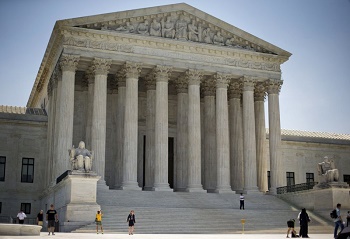
Donald Trump sẽ bước vào Phòng Bầu Dục với khả năng thiết lập lại độ nghiêng về phe bảo thủ trong Tối Cao Pháp Viện và cơ hội để củng cố nó lâu dài. Trump đang hành động một cách nhanh chóng để lấp đầy chỗ trống của tòa án, và có thể lựa chọn đến ba thẩm phán kế vị, để thay thế những vị bước sang 80 tuổi vào cuối nhiệm kỳ của ông Trump. Ảnh chụp Tối Cao Pháp Viện ở Washington ngày 30 Tháng sáu 2014. (AP Photo / Pablo Martinez Monsivais, File) Once in office, Trump can quickly alter Supreme Court agenda https://www.apnews.com/3620c574233043c49969502893b3e495 WASHINGTON (AP) — Even before Donald Trump chooses a Supreme Court nominee, the new president can take steps to make several contentious court cases go away. Legal challenges involving immigration, climate change, cost-free contraceptive care and transgender rights all could be affected, without any help from Congress. The cases turn on Obama administration policies that rely on the president's pen, regulations or decisions made by federal agencies. And what one administration can do, the next can undo. It is not uncommon for the court's docket to change when one party replaces the other in the White House. That change in direction is magnified by the high-court seat Trump will get to fill after Senate Republicans refused to consider President Barack Obama's nomination of Judge Merrick Garland. "We were hoping we'd be looking forward to a progressive majority on the Supreme Court. After the election results, there is a new reality," said Elizabeth Wydra, president of the liberal Constitutional Accountability Center. The Supreme Court already is set to consider a case involving a transgender teen who was born female, but identifies as a male and wants to use the boys' bathroom at his Virginia high school. When the federal appeals court in Richmond ruled in student Gavin Grimm's favor this year, it relied on a determination by the U.S. Education Department that federal law prohibiting sex discrimination in education also applies to gender identity. The new administration could withdraw the department's guidance, which could cause the justices to return the case to the lower courts to reach their own decision about whether the law requires schools to allow students to use bathrooms and locker rooms based on their gender identity. "It is possible, maybe even likely, that if the first question went away, then the court would send case back to the 4th circuit" in Richmond, said Steven Shapiro, legal director of the American Civil Liberties Union, which represents Grimm. Trump already has pledged to undo Obama's plan to shield millions of people living in the country illegally from deportation and to make them eligible for work permits. The Supreme Court, down to eight members after Justice Antonin Scalia's death in February, split 4 to 4 in June over the plan. The tie vote effectively killed the plan for Obama's presidency because lower federal courts had previously blocked it. But the issue remains a live one in the legal system, and supporters of the Obama plan had hoped that a new Clinton administration would press forward. Now, though, all Trump has to do is rescind the Obama team's actions, which would leave the courts with nothing to decide. A similar fate may be in store for the current administration's efforts to get cost-free birth control to women who are covered by health plans from religiously-affiliated educational and charitable organizations. The justices issued an unusual order in the spring that directed lower courts across the country to seek a compromise to end the legal dispute. The groups already can opt out of paying for contraception, but they say that option leaves them complicit in providing government-approved contraceptives to women covered by their plans. The new administration could be more willing to meet the groups' demands, which would end the controversy. Women's contraceptives are among a range of preventive services that the Obama health overhaul requires employers to cover in their health plans. All of that now is at risk, since Trump has called for repeal of the health care law. Obama's Clean Power Plan, calling for cuts in carbon emissions from coal-burning power plants, also could be rolled back once Trump is in office. The federal appeals court in Washington, D.C., is considering a challenge by two-dozen mostly Republican-led states that say Obama overstepped his authority. The Trump team could seek to undo the rules put in place by the Environmental Protection Agency and it could seek a delay in the litigation while doing so, said Sean Donahue, a lawyer for the Environmental Defense Fund. Trump's EPA would have to propose its own rules, which allow for public comment and legal challenges from those who object, Donahue said. Environmental groups effectively fought rules that they said eased pollution limits during George W. Bush's presidency. As some issues pushed by Obama recede in importance, others that have been important to conservatives may get renewed interest at the court. Among those are efforts to impose new restrictions on public-sector labor unions and to strike down more campaign-finance limits, including the ban on unlimited contributions to political parties.
|