|
Sách hiếm - cho đến khi được phổ biến ở các nơi mà "thánh kinh" có mặt. | |||||||||||
|

|
| |||||||||
|
Tìm chữ | |||||||||
|
| |||||||||
| | |||||||||
|
Chủ Trương | |||||||||
| Các đề mục : | |||||||||
» Lưu Trữ Theo Ngày Tháng | |||||||||
| » Các bài về Cải Đạo | |||||||||
| » Các Truyền Nhân Của Chúng Tôi | |||||||||
| » Chữ Quốc Ngữ | |||||||||
| » Hồ sơ CIA giải mật | |||||||||
| » Lạm dụng tình dục | |||||||||
| » GHLM: Lịch Sử và Hồ Sơ Tội Ác | |||||||||
| » Vài Danh Sách Cừu Đen | |||||||||
| » Ý Thức Văn Thân Thế Kỷ 21 | |||||||||
|
| |||||||||
| Các tác giả: | |||||||||
| Bùi Kha | |||||||||
| Charlie Nguyễn | |||||||||
| Hoàng Nguyên Nhuận | |||||||||
| Hoành Linh Đỗ Mậu | |||||||||
| Lý Thái Xuân | |||||||||
| Nguyễn Đắc Xuân | |||||||||
| Nguyễn Mạnh Quang | |||||||||
| Nguyễn Văn Thịnh | |||||||||
| Nguyễn Văn Thọ | |||||||||
| Thiên Lôi | |||||||||
| Trần Chung Ngọc | |||||||||
| Trần Tiên Long | |||||||||
| Trần Trọng Sỹ | |||||||||
| Các tác giả thân hữu | |||||||||
| |||||||||
| |||||||||
|
| |||||||||
|
Các trang bạn | |||||||||
|
▬ Các kênh Youtubes: ▬ Các Facebooks: ▬ Các websites: | |||||||||
|
website hit counter
|
|
Thuyết Tiến Hóa Của Darwin Được Khai Triển Hơn Bao Giờ Hết Source https://www.time.com/time/magazine/article/0,9171,1879213,00.html SH giới thiệu | ||
Harry Potter, Sherlock Holmes, GI Joe và Charles Darwin có gì giống nhau? Họ đều sẽ được lên phim chiếu trong các rạp hát trong năm nay. Chỉ có một người thật trong danh sách đó được Paul Bettany đóng vai trong tiến trình sáng tạo sinh học. Như một thời trang danh nhân thực sự, Darwin sẽ xuất hiện ở mọi nơi trong năm nay. Trong một hội tụ của các ngày kỷ niệm, Darwin được 200 tuổi vào ngày 12 tháng hai (2009), và quyển sách nổi tiếng của ông "Về Nguồn Gốc Các Chủng Loại", sẽ được 150 tuổi vào ngày 24 tháng 11 (2009). Sẽ có nhiều tài liệu, nhiều bài thuyết trình, những cuộc hội thảo, các cuộc triễn lãm ở những viện bảo tàng. Các chủ đề về Darwin đang được tải lên các trang nhật ký trên mạng, và cả xe sách về Darwin đang được xuất bản. Một chiếc tàu mô phỏng chiếc HMS Beagle, chiếc tàu đã chở Darwin đi khắp thế giới, sẽ chạy theo lộ trình trước đây. Trong tháng Giêng, Đại học Stanford ở Mỹ đã cho một nhóm 90 người du hành tương tự như thế, nhưng thoải mái hơn, trên chiếc máy bay tư Boeing 757. Sachhiem.net xin mời bạn đọc xem tiếp các chi tiết hấp dẫn khác trong trang web www.time.com sau đây:
The Ever Evolving Theories of Darwin By Carl Zimmer Thursday, Feb. 12, 2009
It's only fitting to recognize the accomplishments of a great biologist. But there's a risk to all this Darwinmania: some people may come away with a fundamental misunderstanding about the science of evolution. Once Darwin mailed his manuscript of On the Origin of Species by Means of Natural Selection, or the Preservation of Favoured Races in the Struggle for Life to his publisher, the science of evolution did not grind to a halt. That would be a bit like saying medicine peaked when Louis Pasteur demonstrated that germs cause diseases. Today biologists are exploring evolution at a level of detail far beyond what Darwin could, and they're discovering that evolution sometimes works in ways the celebrated naturalist never imagined. "The biological problems we're dealing with are much more complex," says Massimo Pigliucci, an evolutionary biologist at Stony Brook University in New York. "That said, it's a lot of fun. I'm not complaining." Darwin developed his theory by gathering as much information as he could about life. He collected it while voyaging on the Beagle, by sitting in front of a microscope back in England and by writing to a global network of correspondents. Today, however, biologists can feast on a far bigger banquet of data. The fossil record was scanty in Darwin's day, but now it has pushed the evidence of life on Earth back to at least 3.4 billion years ago. And while Darwin recognized that variation and heredity were the twin engines that made evolution possible, he didn't know what made them possible. It would take almost a century after the publication of On the Origin of Species for biologists to determine that the answer was DNA. DNA is like a genetic cookbook, using four molecular "letters" to spell out recipes for everything from hormones to heart valves. Biologists today are reading the 3.5 billion letters in the human genome as well as the DNA from thousands of other species, and they've amassed vast databases of genetic information that they can rummage through to learn about how life evolved. Time and again, biologists are finding that Darwin had it right: evolution is the best way to explain the patterns of nature. "You just can't even start to make sense of all this data without a framework of evolution," says Günter Wagner, an evolutionary biologist at Yale University. Darwin proposed that natural selection could gradually transform a species. Scientists have observed thousands of cases of natural selection in action. They've documented that beaks of finches on the Galápagos Islands have gotten thicker when droughts forced the birds to crack tough seeds to survive. They've observed bacteria develop resistance to drugs that were believed to be invincible. Now biologists are applying DNA-sequencing technology to natural selection, which lets them identify the individual genetic changes that boost reproductive success. As populations adapt to their surroundings, they can gradually evolve into new species. "We now have, I think, a good understanding of how new species arise--that is, how biological diversity is created," says Jerry Coyne, an evolutionary biologist at the University of Chicago and the author of the new book Why Evolution Is True. "Darwin made little inroad into the problem, despite the title of his magnum opus." Biologists have also found plenty of evidence to support Darwin's other major claim: that different species share a common ancestry. Over the past 15 years, for example, paleontologists have found several fossils of whales with legs, linking modern whales to their terrestrial ancestors. Besides studying fossils, biologists can discover the genealogy of species by looking at their DNA. The fossil record points to hippos and other hoofed mammals as being the closest living relatives of whales. So does their DNA. Our own DNA contains clues to the bonds we share with the rest of life--it turns out, for instance, that we are closer kin to mushrooms than to sunflowers. It's been 1.5 billion years or more since our ancestors split off from our fungal cousins. How did the genome of our ancestor change so that it could produce two-legged primates? One part of the answer is that mutations over time altered genes that encode proteins, and some of those changes have been favored by natural selection. But that does not mean that our genome--the sum total of our human DNA--is a finely tuned collection of protein-coding genes. In fact, a lot of mutations that all humans carry neither helped nor harmed our ancestors. They spread just by chance. And a lot of our genome is not made up of protein-coding genes. In fact, 98.8% of it is not. Some of that 98.8% consists of "pseudogenes"--genes that once encoded proteins but no longer can because of a crippling mutation. They are the molecular equivalent of a vestigial tail, allowing us to see evolution's track. Biologists are a long way from understanding the entire genome, but as they get to know its parts better, they're getting a more precise comprehension of one of the most important features of evolution: how complex organs evolve. The notion that something as intricate as an eye could have evolved, Darwin wrote, "seems, I freely confess, absurd in the highest degree." But he argued that new complex organs could evolve through a series of intermediate forms. Paleontologists can track some of life's transformations in fossils--observing how fins gradually evolved into feet, for example. But fins and feet and other complex structures are also encoded in DNA, and until the 1980s, biologists had almost no knowledge of the genes that built them. Over the past 25 years, biologists have identified many of the genes that help build embryos. A number of them help lay out the embryo's blueprint by letting cells know where they are. The cells absorb proteins floating around them, and the signals trigger the cells to make other proteins, which in turn clamp onto certain bits of DNA to switch neighboring genes on and off. This network of genes eventually leads a cell to give rise to an arm or a brain or a tongue. These networks are so intricate that they probably put some limits on evolution's creative potential. Once a lineage of animals evolves networks for arms and legs, it's not easy for evolution to rewire the networks to produce, say, wheels. For one thing, many networks share some of the same genes. A change to a gene that improves one network may wreck another one. So for the most part, we're stuck with what evolution gave us. Nevertheless, new traits have evolved. Once there were no brains, and now there are billions. Once you could search the entire world and never find a leaf. Now the world is green. Biologists are discovering some of the genetic secrets for evolving new traits. One is to recycle old genes. Growing hair, for example, is a trait that evolved only in mammals. One of the key proteins in our hair is known as alpha-keratin. Not long ago, some Austrian and Italian researchers decided to search for alpha-keratin genes in animals that lack hair. They found those genes in chickens and lizards--which belong to the closest living lineages to mammals. Lizards build alpha-keratin in their claws. And it turns out that mammals do as well. The research suggests that the hairless ancestors of today's mammals already had alpha-keratin that was used to build their claws; only later was alpha-keratin borrowed to help build hair. Darwin had no way of knowing this, since he had no way of examining DNA. If he did, he might well have rethought one of his most potent metaphors for evolution: the tree of life. It's not that the metaphor is wrong. Scientists regularly reconstruct evolutionary branches today. When a new disease breaks out, for example, the fastest way to figure out what to do is to determine what the pathogen is related to. But there's more to the history of life than the branching of a tree. Every now and then, DNA moves between species. Viruses ferry genes from one host to another. Bacteria swap genes inside our bodies, evolving resistance to antibiotics in our own gut. Some 2 billion years ago, one of our single-celled ancestors took in an oxygen-consuming bacterium. That microbe became the thousands of tiny sacs found in each of our cells today, known as mitochondria, that let us breathe oxygen. When genes move this way, it's as if two branches of the tree of life are being grafted together. Biologists have documented a vast amount of gene-swapping among single-celled organisms--which happen to make up most of the diversity of life on Earth. There are 10,000 species of bacteria in a spoonful of dirt, twice as many species as all the mammals in the world. In the genome of a typical microbe, most of the genes hopped from one species to another at some point in the history of life. In some ways, the history of life is indeed like a tree, sprouting new branches. But in some ways, it's also like a tapestry, emerging from a loom, its genetic threads woven together in new combinations. In the mid-1900s, biologists succeeded in merging the newest biological developments at the time into a new vision of evolution known as the Modern Synthesis. Today a number of biologists argue that it's time for a new understanding of evolution, one that Pigliucci has called the Extended Evolutionary Synthesis. For now, they are fiercely debating every aspect of that synthesis--how important gene-swapping is to the course of evolution, for instance, and how gene networks get rewired to produce new traits. Some researchers argue that many patterns of nature--such as the large number of species in the tropics--cannot be reduced to the effect of natural selection on individuals. They may be following rules of their own. "Which of these ideas is going to actually survive and prove fruitful is anybody's guess," says Pigliucci. "I don't see things coalescing for at least a decade or more." Darwin predicted this. "We can dimly foresee that there will be a considerable revolution in natural history," he wrote at the end of On the Origin of Species. He saw his work not as the end of biology but as a beginning. Putting Evolution to The Test. How does Darwin hold up? Darwin's microscope. His research, given the technology, was robust [This article contains a table. Please see hardcopy of magazine or PDF.] DARWIN TODAY Species share a common ancestry, like branches on a tree Genetic studies confirm that different species have evolved from common ancestors. But DNA has also jumped from one species to another--turning parts of the tree of life into a web Humans evolved from apes in Africa Evidence from DNA indicates that chimpanzees and bonobos are the closest living relatives to humans. Fossils document the course of human evolution in Africa from apelike ancestors over the past 7 million years Natural selection is a powerful force driving evolution Natural selection's fingerprints can be detected in the human genome. But many mutations have spread thanks to pure chance (a process known as genetic drift) Complex traits like eyes can evolve through a series of intermediate steps Fossils have documented some of those steps in structures such as limbs and ears. Studies on DNA have shown how genes for building old organs have been "borrowed" to help build new ones. Zimmer is the author of the forthcoming book The Tangled Bank: An Introduction to Evolution
Các bài viết khác
| ||
|
Trang Khoa học | ||

 What do Harry Potter, Sherlock Holmes, G.I. Joe and Charles Darwin
have in common? They will all be coming to movie theaters this year. The
only real person on that list will be played by Paul Bettany in the
biopic Creation. And in true celebrity fashion, Darwin will be
everywhere this year. In a convergence of anniversaries, Darwin would
have turned 200 years old on Feb. 12, and his landmark book, On the
Origin of Species, turns 150 on Nov. 24. There will be documentaries,
lectures, conferences and museum exhibits. Darwin-themed blogs are being
launched, and a cartload of Darwin-related books are being published. A
replica of H.M.S. Beagle, the ship that carried Darwin around the world,
will retrace his path. This January, Stanford University let a group of
90 people do likewise--albeit more comfortably, on a private Boeing 757.
What do Harry Potter, Sherlock Holmes, G.I. Joe and Charles Darwin
have in common? They will all be coming to movie theaters this year. The
only real person on that list will be played by Paul Bettany in the
biopic Creation. And in true celebrity fashion, Darwin will be
everywhere this year. In a convergence of anniversaries, Darwin would
have turned 200 years old on Feb. 12, and his landmark book, On the
Origin of Species, turns 150 on Nov. 24. There will be documentaries,
lectures, conferences and museum exhibits. Darwin-themed blogs are being
launched, and a cartload of Darwin-related books are being published. A
replica of H.M.S. Beagle, the ship that carried Darwin around the world,
will retrace his path. This January, Stanford University let a group of
90 people do likewise--albeit more comfortably, on a private Boeing 757.
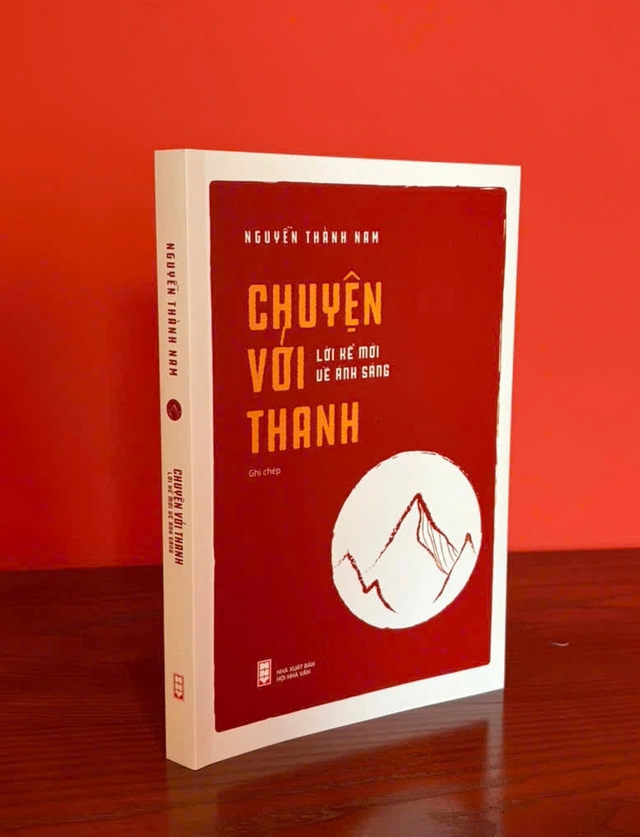 kiểm tra theo đúng chức năng, thẩm quyền và quy định của pháp luật về xuất bản.
 khiến 12 người thiệt mạng và 32 người bị thương. Trên xe có 44 người, bao gồm cả hai tài xế. Đáng chú ý, trong đoàn hành hương có 3 linh mục và 6 nữ tu.
  đối tượng nghi vấn là Hồng Thiên An, sinh năm 1997, trú xã Đồng Dương, Đà Nẵng. Hồng Thiên An khai nhận: khoảng tháng 8/2018, đã mua một tài khoản FB mang tên “Linh Đan” trên mạng xã hội.