|
Sách hiếm - cho đến khi được phổ biến ở các nơi mà "thánh kinh" có mặt. | |||||||||||
|

|
| |||||||||
|
Tìm chữ | |||||||||
|
| |||||||||
| | |||||||||
|
Chủ Trương | |||||||||
| Các đề mục : | |||||||||
» Lưu Trữ Theo Ngày Tháng | |||||||||
| » Các bài về Cải Đạo | |||||||||
| » Các Truyền Nhân Của Chúng Tôi | |||||||||
| » Chữ Quốc Ngữ | |||||||||
| » Hồ sơ CIA giải mật | |||||||||
| » Lạm dụng tình dục | |||||||||
| » GHLM: Lịch Sử và Hồ Sơ Tội Ác | |||||||||
| » Vài Danh Sách Cừu Đen | |||||||||
| » Ý Thức Văn Thân Thế Kỷ 21 | |||||||||
|
| |||||||||
| Các tác giả: | |||||||||
| Bùi Kha | |||||||||
| Charlie Nguyễn | |||||||||
| Hoàng Nguyên Nhuận | |||||||||
| Hoành Linh Đỗ Mậu | |||||||||
| Lý Thái Xuân | |||||||||
| Nguyễn Đắc Xuân | |||||||||
| Nguyễn Mạnh Quang | |||||||||
| Nguyễn Văn Thịnh | |||||||||
| Nguyễn Văn Thọ | |||||||||
| Thiên Lôi | |||||||||
| Trần Chung Ngọc | |||||||||
| Trần Tiên Long | |||||||||
| Trần Trọng Sỹ | |||||||||
| Các tác giả thân hữu | |||||||||
| |||||||||
| |||||||||
|
| |||||||||
|
Các trang bạn | |||||||||
|
▬ Các kênh Youtubes: ▬ Các Facebooks: ▬ Các websites: | |||||||||
|
website hit counter
|
The other Asian tiger - Một con hổ Châu Á nữa!
Subject: The_Economist_:_(Việt_Nam)_C on_hổ_châu_Á_n ữa_đây_này_!!!
From: Mike Wilson
Date: Thu, August 04, 2016 3:36 pm
Sau chiến tranh, trong thập kỉ 1980 VN nghèo ngang Ethopia !
Kể từ khi kinh tế vươn lên GDP tính trên đầu người (GDP per person) của VN tăng tiến giống y như của TQ !!!
Về giáo dục VN đang tiến xa hơn Thái, Malaysia và Indonesia - dù 3 nước này đang giàu hơn VN !!!
Nếu TPP được Quốc Hội My~ phê chuẩn, VN sẽ có lợi nhất về xuất khẩu và tăng trưởng kinh tế !
nth-fl
________________
https://www.economist.com/news/leaders/21703368-vietnams-success-merits-closer-look-other-asian-tiger
The other Asian tiger -
Vietnam’s success merits a closer look
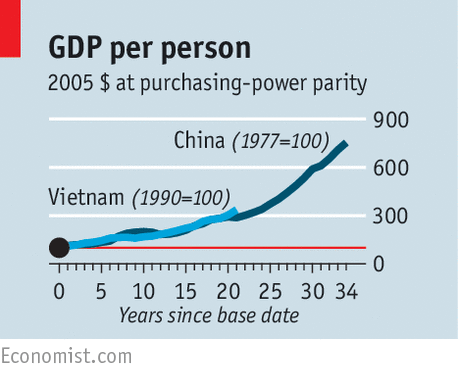
Biểu đồ cho thấy, tính từ khởi điểm kinh tế vươn lên,
GDP - tính trên mỗi người VN - tăng tiến cùng nhịp, giống y như TQ !!!
Vietnam, with a population of more than 90m, has notched up the world’s second-fastest growth rate per person since 1990, behind only China. If it can maintain a 7% pace over the next decade, it will follow the same trajectory as erstwhile Asian tigers such as South Korea and Taiwan. Quite an achievement for a country that in the 1980s was emerging from decades of war and (VN) was as poor as Ethiopia (see article).
Most obviously, openness to the global economy pays off. Vietnam is lucky to be sitting on China’s doorstep as companies hunt for low-cost alternatives. But others in South-East Asia, equally well positioned, have done less. Vietnam dramatically simplified its trade rules in the 1990s. Trade now accounts for roughly 150% of GDP, more than any other country at its income level. The government barred officials from forcing foreigners to buy inputs domestically. Contrast that with local-content rules in Indonesia. Foreign firms have flocked to Vietnam and make about two-thirds of Vietnamese exports.
Allied to openness is flexibility. The government has encouraged competition among its 63 provinces. Ho Chi Minh City has forged ahead with industrial parks, Danang has gone high-tech and the north is scooping up manufacturers as they exit China. The result is a diversified economy able to withstand shocks, including a property bust in 2011.
At the same time Vietnam, like China, has been clear-minded about the direction it must take. Perhaps most important has been a focus on education. Vietnamese 15-year-olds do as well in maths and sciences as their German peers. Vietnam spends more on schools than most countries at a similar level of development, and focuses on the basics: boosting enrolment and training teachers. The investment is pivotal to making the most of trade opportunities. Factories may be more automated, but the machines still need operators. Workers must be literate, numerate and able to handle complex instructions. Vietnam is producing the right skills. Thailand, Indonesia and Malaysia lag behind, despite being wealthier.
Mekong, (Thailand, Laos, Cambodia), you follow (VN)
Now a middle-income country, Vietnam faces a steep ascent to the high-income ranks. The Trans-Pacific Partnership, a 12-nation trade pact meant to be a boost, may well be blocked by America’s inward turn. State-owned enterprises (SOEs) are bloated. Competing provinces, long a benefit, are a liability when they duplicate infrastructure. Vietnam has struggled to build a domestic supply chain. Moving up in value will be hard when China’s grip on high-end output is tightening. The repressive, one-party system of government is brittle.
But Vietnam’s past quarter-century means that it has a decent chance of prevailing. It is at last starting on SOE reform. It is negotiating trade deals in Asia and with Europe. And it is drafting plans to increase its domestic share of manufacturing without scaring off foreigners. Vietnam is a model for countries trying to get a foot on the development ladder. With luck, it will also become a model for those trying to climb up it.
| Đó đây |
|
2026-04-05 - Quebec cấm cầu nguyện trên đường phố và mở rộng lệnh cấm các biểu tượng tôn giáo, - trong khi phe phản đối tuyên bố sẽ đấu tranh pháp lý. Các nhóm phản đối Dự luật 9 — đạo luật nhằm củng cố và mở rộng quy định về tính thế tục của chính quyền Quebec —
2026-04-05 - Thêm một quốc gia đóng cửa không phận với máy bay quân sự Mỹ - Áo duy trì chính sách "trung lập vĩnh viễn" từ năm 1955, sau khi thông qua đạo luật hiến pháp cam kết không tham gia liên minh quân sự và không cho phép đặt căn cứ quân sự nước ngoài trên lãnh thổ.
2026-04-02 - Nguyễn Gia Kiểng vô sỉ khi xúc phạm Chủ tịch Hồ Chí Minh! - 2026-04-02 - Nga tiến vào "vùng cấm", phá thế phong tỏa Cuba, Mỹ phản ứng bất ngờ - 2026-04-02 - Mong Ông Tô Lâm Quan Tâm Những Vụ Việc Như Thế Này - 2026-03-29 - Phản biện vài clips hạ giá "tôn giáo bạn" của kênh Thiên An Cơ Đốc - 2026-03-29 - Ở đây, 1 thành phố thuộc bang Cali, không nhà thờ Công giáo La mã nào treo cờ Vatican cả! - 2026-03-29 - Những Âm Mưu Phản Quốc Trong Các Bản Điều Trần của Ông Nguyễn Trường Tộ - 2026-03-27 - Tại sao Lào và Campuchia cùng đến Việt Nam vào lúc này? - 2026-03-27 - Nổ lớn ở Nhà máy lọc dầu Port Arthur (Mỹ), cảnh tượng hỗn loạn chưa từng có -
|
 đã tuyên bố sẽ sử dụng mọi biện pháp pháp lý để tiếp tục cuộc đấu tranh chống lại dự luật này, bất chấp việc nó đã được Quốc hội thông qua vào thứ Năm vừa qua.
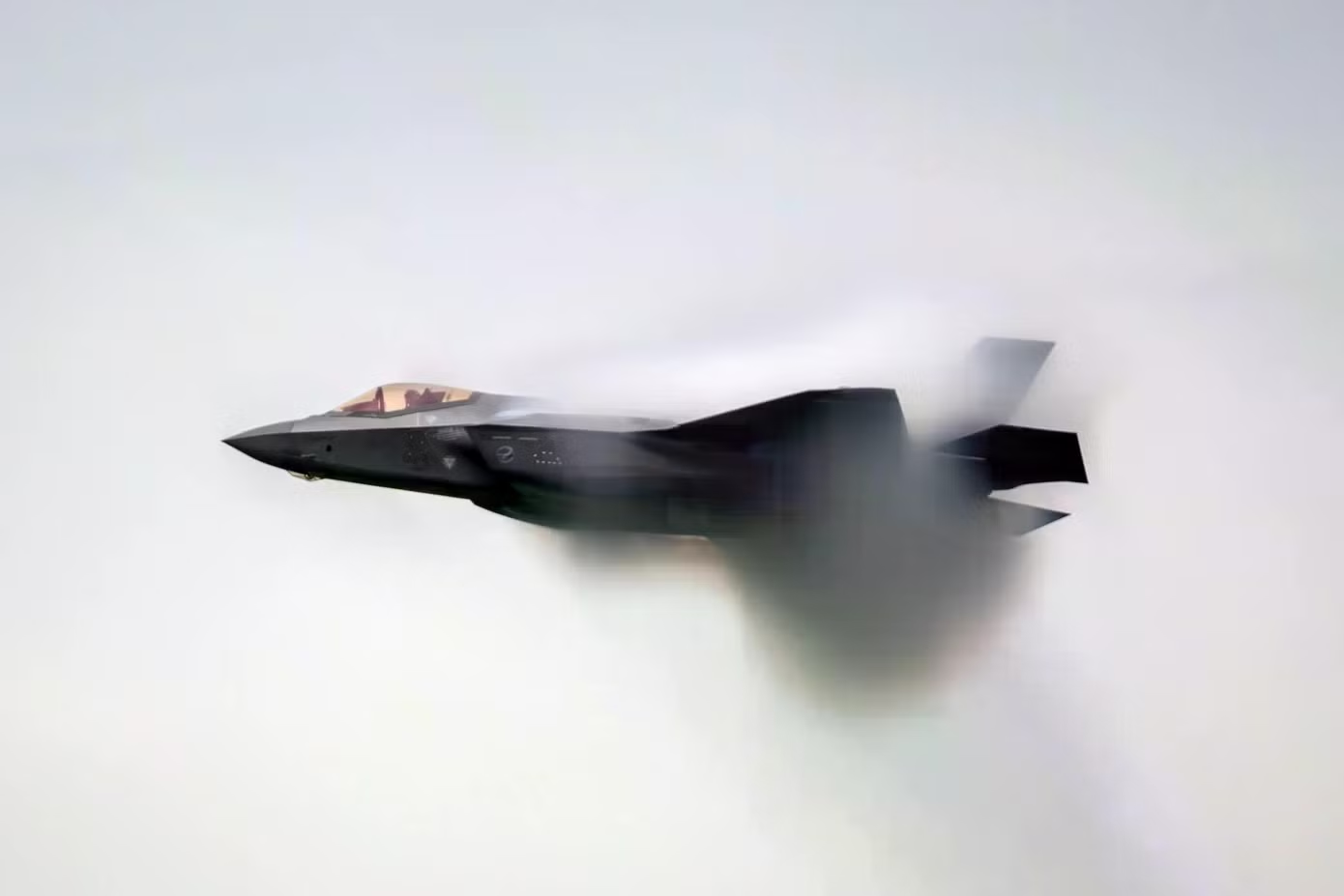 Đại tá Michael Bauer - Người phát ngôn Bộ Quốc phòng Áo, cho biết, nước này sẽ không có bất kỳ ngoại lệ nào đối với Lầu Năm Góc, và quyết định cấm máy bay quân sự Mỹ bay qua không phận Áo là quyết định cuối cùng.
Trang Sách Hiếm
| ©2012 |